Taking a new turn..
My daughter, Emma, asked me to simplify cooking. More practically, to write a blog that demystifies how to navigate thinking about cooking. As my son-in-law, Calvin, remarked, “it’s really easy to follow a recipe for a day but how do you just cook on a daily basis without a lot of fuss and muss?”. I got to thinking maybe there was something there. My sons have always made fun of my refrigerator. They often would open its doors and look in and say, “there’s nothing in here to actually eat.” And they were kind of right. There were always components there to make something if you gave it a little thought. Lemon juice, homemade salad dressings, lots of fruit and veggies but nothing already assembled and ready to eat.
I’ve also been going down the rabbit hole of trying to eat better, more thoughtfully but not restrictively. Being a 3x cancer survivor I often try and maximize protein, veggies and fruit but I still love my dessert and my red wine so I have to try and balance it all. I’ve been reading a lot about the benefits of teas so am exploring that as well.
So to start…
I like to always have a few things at the ready in case anyone drops in. My aim is to always let guests feel welcome - and I find that by pulling out a few simple things they always feel taken care of.
I almost always have Spicy Nuts, Castlevetrano olives and a good cheese on hand. I usually have some kind of bread in my freezer that I can pull out and toast. I buy crackers but often by the time I open them they’ve gone rancid so I’ve stopped buying crackers unless I know I’m serving them that day. I find that slicing an apple or pear can often be a great substitute for bread.
Lemons - I think homemade salad dressings are easy and always so much better than store bought so I always like to have lots of lemons on hand. When I had a full house I would squeeze a bunch of them in the beginning of the week so so I’d always have lemon juice at the ready. I easily went through a dozen lemons in a week. Now a days I prefer doing it closer to the time of when I’ll need it. I like adding zest as well - it adds so much flavor and punch so I usually zest and juice 4 - 6 lemons at a time. Lately I’ve been digging this Jean George dressing which adds sherry vinegar and mellows out the acidity and adds a little extra richness to the dressing.
I’ve found that over the years you can pull parts and pieces from different recipes to and make them your own. You can change the ingredients if you keep it in the same “family”. Switching out strawberries for raspberries or throwing in nuts or changing a cheese. It’s a thought process and a mindful taste test in your head. Does the combination seem to work for you? Is it something you’ve encountered before? It doesn’t have to just be exactly what’s written on the page.
Both of these vinaigrettes dressings can be used to marinate fish or chicken. You can add fresh herbs, shallots or Dijon mustard to either of them to make them taste slightly different. And here’s the thing - do you really need another recipe to do that or can you, the chef, confidently make that decision?
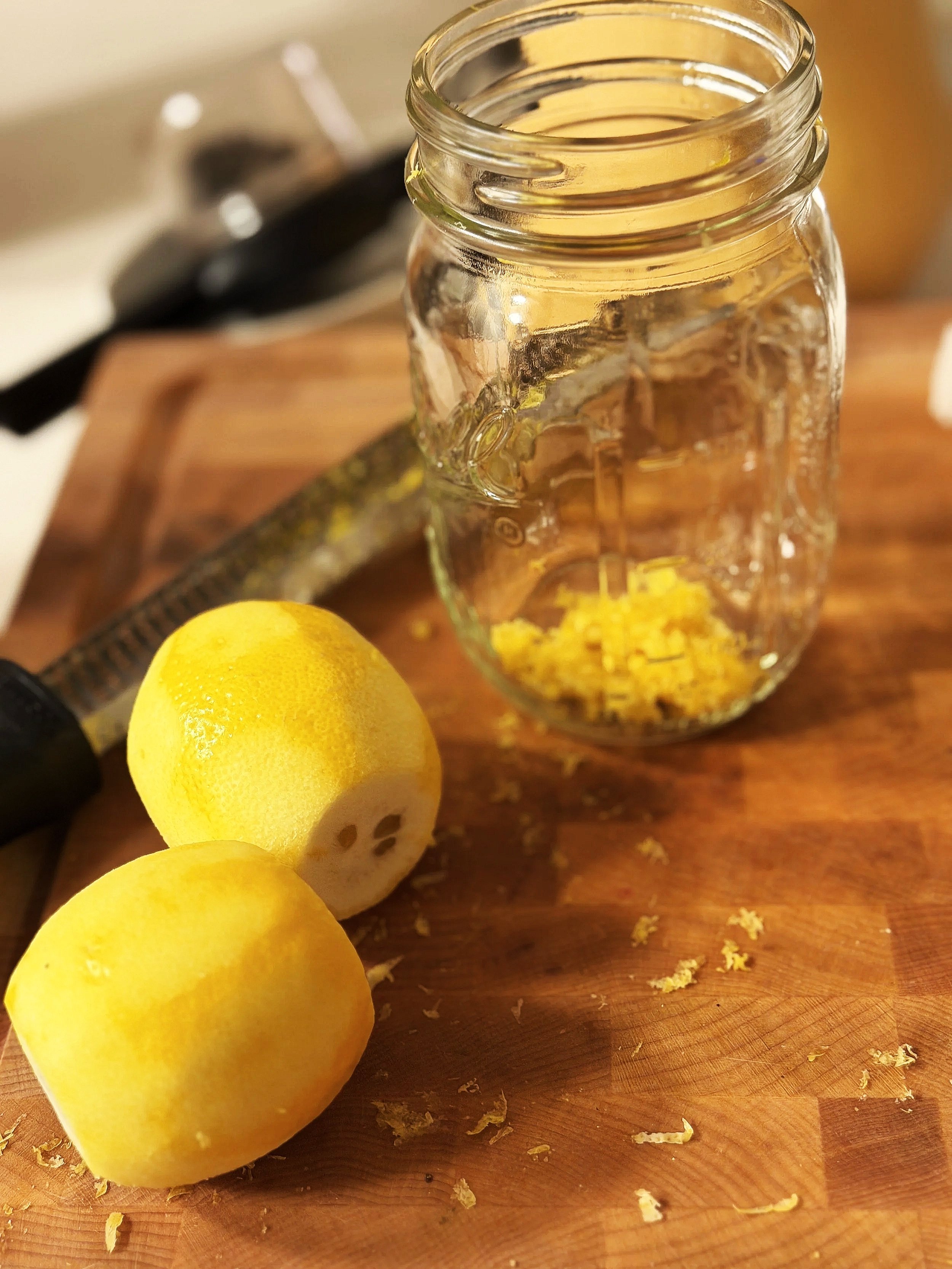
A little zest goes a long way and adds brightness and flavor to the dressing.
2 Simple Dressings to have on hand
Lemon & Olive Oil Dressing
Zest and juice of two lemons
Olive Oil
Kosher Salt, Pepper
Optional: honey or maple syrup, Dijon mustard
I like my dressings and marinades on the more acidic side so I usually add less olive oil than most recipes call for. This is a personal call. To start I would go 1:1 as far as lemon juice to olive oil (and make sure it’s an olive oil that you like!). Another discussion is always about the kosher salt. Yet a third discussion is whether a dressing needs some sweetness. I usually do not add any sweetener and when I do it’s usually maple syrup or honey. Occasionally the lemons are really tart and you need that extra touch of sugar….taste, taste and then taste again.
Did you know that Morton’s Kosher salt is roughly twice as dense and salty as Diamond? I grew up with Morton’s and so my taste will go there. Again - do not underestimate the value of tasting what you are mixing!
Now the question about Dijon. Dijon acts as an emulsifier in salad dressings - what does this mean? In short, it keeps the oil and vinegar blended together and adds a bit of tang to your dressing. If you add just a tiny bit it should ensure that your dressing does not separate on the salad and will cling to the leaves better.
I keep my dressings in a mason jar and don’t mind shaking them up - again there is not real right or wrong here.
My version of Jean George’s Lemon & Sherry Vinaigrette
I keep it simple - I add equal parts lemon juice, sherry vinegar and olive oil. Then I taste it. I will often add a bit more olive oil to this.
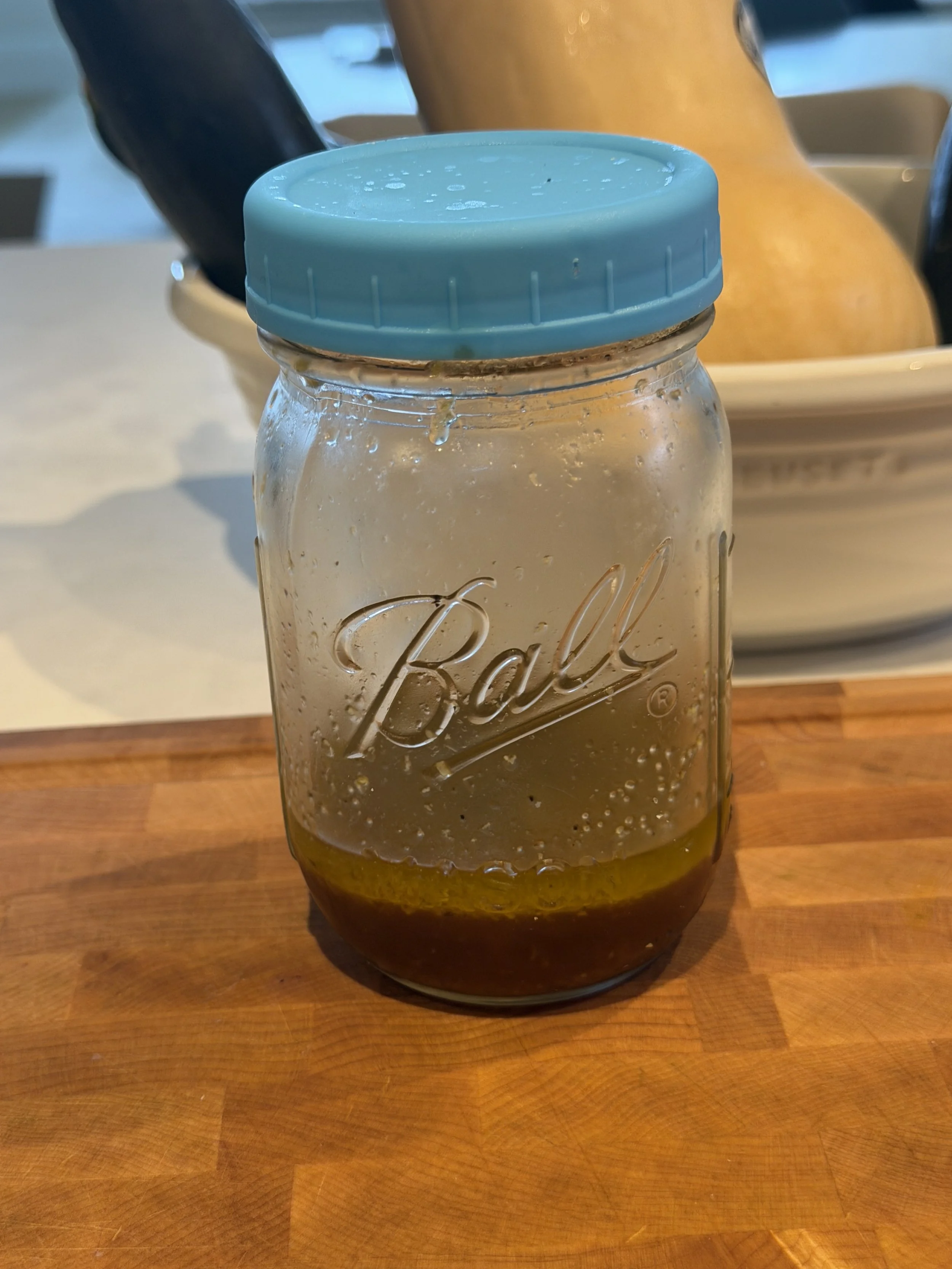
Here you can see that the olive oil is about 1/3 of the dressing.